
There’s snow place like Japan’s stunning Niigata region
As the plane began its approach into Tokyo airport, the snow-capped Mount Fuji came into view and I knew the next week would see a dream 30 years in the making come true, writes Warran Brindle
I have always wanted to visit Japan and now not only was I arriving in the Land of the Rising Sun but, as a keen snowboarder, I was heading to the Niigata region, known as Japan's snow country – famous for some of the best winter sports in the world and the snowiest inhabited place in the world. ‘Crafted by nature, perfected by time’ is a very apt description. As a guest of the tourist authority and a member of a small group of writers and videographers, nothing could prepare me for how profoundly moving this trip would be.
On arrival we checked into the Super Hotel in Tokyo, which gave me a glimpse of the famous neon cityscape which had first fascinated me. The next morning, after an early morning walk as the citizens of the city went to work, I readied myself to enjoy another iconic image of Japan – the bullet train.

We took our seats on the train to Urasa, which, of course, was bang on time, and felt like entering our own private jet. Luxurious seating and big windows allowed us to watch the dramatic change in weather as we left Tokyo.
Blue skies quickly changed to a white wall as the snow started falling heavily as we left the suburbs of Tokyo behind. And by the time we arrived at Urasa, just 90 minutes later, we walked out into a winter wonderland.
The snow was piled feet deep alongside the road and we got our first view of the traditional local buildings with steeply pitched roofs and huge timber beams to support and shed the heavy snow they just knew would arrive.
This was truly getting off the usual tourist-beaten track and deep into the heart of Japan, and immediately we felt that what we were embarking on was a very special experience. It was made even more meaningful by our knowledgeable guides Matthew and Jennifer.
At our first stop we enjoyed a traditional lunch at Miyanoya. Just like the many pilgrims who visit the nearby Hakkaisan Shrine, we were treated to traditional soba noodles made of buckwheat which are naturally gluten-free, sometimes using funori (seaweed). ‘Mountain vegetables’ (Sansai) are a regional speciality too.
Then on to the Saifuku-ji Temple which was a dazzling, colourful and mesmerising Zen space of contemplation. The carvings were intricately beautiful.
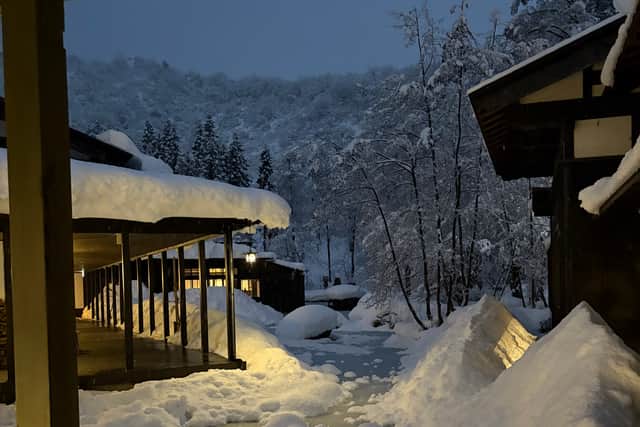
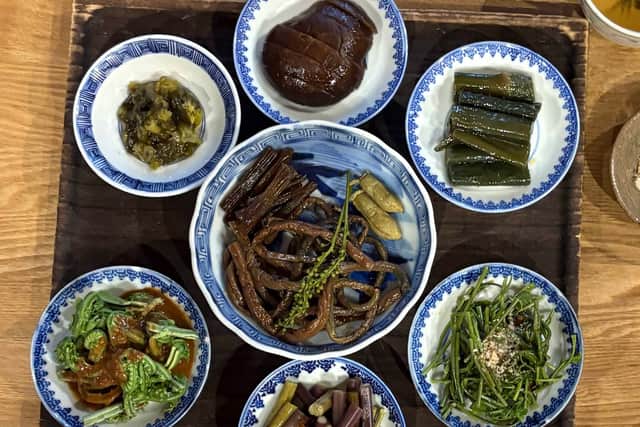
So feeling truly full of sustenance, both physical and spiritual, we headed for our accommodation in a traditional Ryokan, or inn. It was magical, surrounded by snow drifts, so you felt almost snowed in. It was a premium, high-end experience where you are encouraged to wear the traditional Japanese flowing garments - yukata. It would definitely be described as a boutique hotel in the UK but I’m not sure that translates too well into Japanese. Shoes off on arrival, there are separate houses connected by walkways to protect residents from the snow. Our wonderful evening meal was served on a tray with small plates of mostly vegetable-based dishes, featuring unusual items such as rose hip jelly, and with locally-grown ingredients. The area's amazing water and snow influence the food, and most things are vegetarian or vegan, all washed down, of course, with some local sake, about which we were to learn more later.
In Niigata a big part of the all-round experience are onsen - traditional, natural mineral spa pools, which range in size and quality. The one here was a set of baths where you could go from inside to outside. I found myself in the unfamiliar situation of sitting outside in a really hot natural spring bath with the snow coming down on my head. I was also naked, as bathing suits are not allowed. But I soon got comfortable with this custom.
We awoke to more snow and set off for the Tunnel of Light – a series of art exhibits that lead you to a view over one of the deepest river valleys in Japan, the Kiyotsu Gorge. An Instagram dream.
Lunch at the tiny Yukitsubaki-no-Kitchen was another unique experience where the locally-grown rice is the star. Cooked in traditional stone pots it has a distinct flavour, again, due to the snow and water here. Another dish combined raw egg and broth. Not our usual fayre, but everyone enjoyed it. The kitchen was tiny, with only three or four people cooking, and it felt like being in someone's lounge rather than a restaurant.
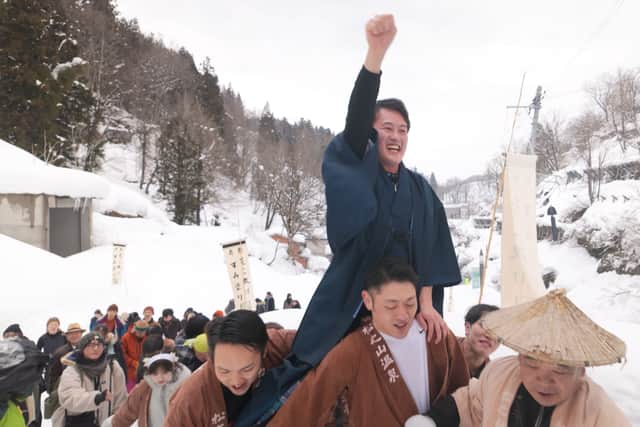
With all this super healthy food we were all feeling well and remarking on how good our skin looked! So we felt we could represent our own culture well as we set off to the 500-year-old Matsunoyama Winter Festival where we were honoured to witness the groom-throwing ceremony.
Unique to the area, local newly-wed men seem to be delighted to be carried aloft by their friends to the top of a snow-covered (of course) hill where they are then thrown over to roll down to the feet of their delighted brides.
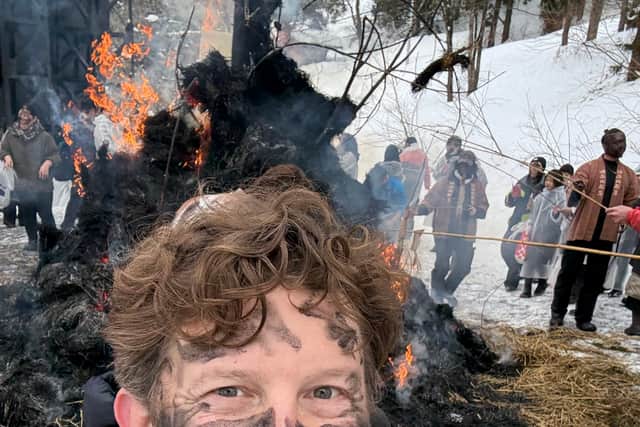
Everyone seemed to be having a great time and we were honoured to be invited to the Sumi-nuri ritual where participants rub sacred ash on each other’s faces for luck. Few Westerners witness this ceremony. I not only felt privileged, but a touch emotional about our time there. The people were so welcoming and happy to include us in the event. I did, however, politely pass on the octopus tentacle barbecued on the end of a stick that was going down well with the revellers.
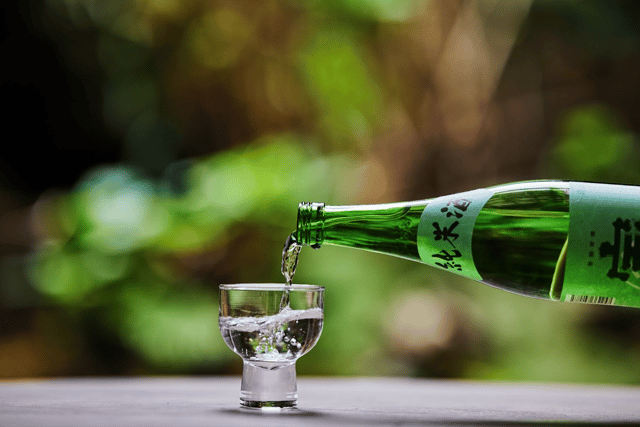
The next morning I think we discovered why there were smiles on everyone’s faces - we arrived at the Kamino Sake Brewery. There we saw how the traditional rice-based drink is brewed in the winter months and the store rooms of snow they keep to provide the pure water required to produce the highest-quality sake.
No trip to Japan is complete without sushi and we sampled some fine examples of the art at Sushiyoshi before heading off to try our hands at making hands-on making sasami sushi and pot mats – called Nabe-shiki. They are weaved to put hot cooking pots on and, it's fair to say, we might need a little more practice before we launch our British start-up! Luckily Mahora had their own nabe-shiki so we could enjoy dinner around a traditional fireplace.
The next morning was clear and bright – ideal for us to hit the slopes at the Lotte Arai resort. After a day of stunning skiing, or snowboarding in my case, we had time for a final dinner at local pub Chochin-zao.
Our last morning was spent walking the snow-sheltered streets of Gangi-dori. The highlight here was visiting a 400-year-old candy store - Takahashi Magozaemon Shoten. Fascinating and, again, another uniquely Japanese experience to add to my long list of memories I’ll take from this trip. Then after a visit to Takada Castle Site Park, followed by lunch at Furusatto we had to board the train back towards the bright lights of Tokyo.
All of our tired but happy group vowed to be back soon.
Fact box
The Niigata region is a year-round destination - from powder snow skiing and mountain adventures to cultural authenticity, sustainable luxury stays, and heritage crafts. Warran visited the regions of Uonoma, Tokamachi & Matsunoyama and Myoko.
‘Find out more about the ‘Five Gifts of Niigata’ - snow, land, water, food, and craftsmanship at https://discover-niigata.com/
The Niigata itinerary was organised by awayuki.com